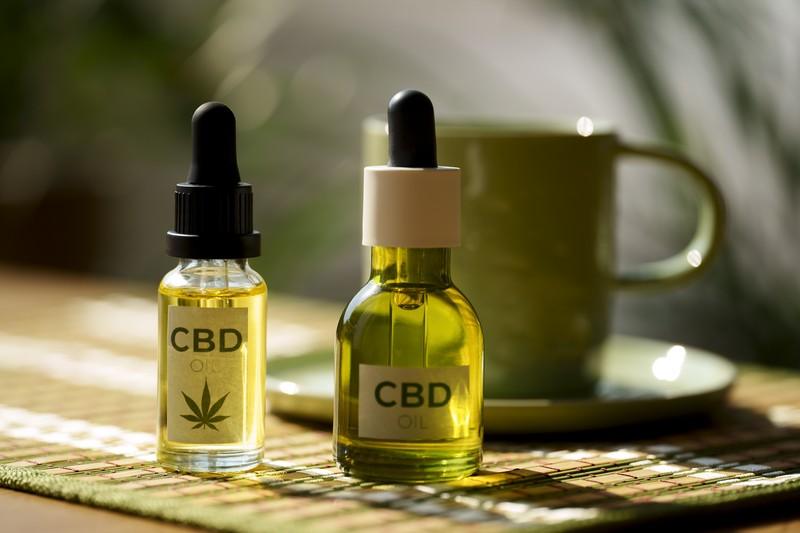

Quick Summary
CBD oil has become a popular option for people seeking relief from pain, but research has not yet established it as a proven treatment for most pain conditions. CBD differs from THC because it does not produce the same intoxicating effects. Studies continue to examine its potential effects on pain, inflammation, and pain perception, although much of the evidence remains limited or involves cannabis products containing THC. CBD may also interact with medications. Learn what current evidence says about CBD oil for pain and explore other non-invasive options at Elite Spine and Health Center.
If you are dealing with ongoing pain, you may have heard that CBD oil can help. But does CBD oil for pain actually work? Research is still developing, and the evidence is more limited than many online claims suggest.
CBD, or cannabidiol, is a compound derived from cannabis that does not produce the intoxicating effects associated with THC. While researchers continue to study its potential effects on pain and inflammation, CBD should not be viewed as a proven replacement for established pain treatments.
Does CBD Oil for Pain Work?
Sure, medical marijuana has become as common as laundry soap. Medical cannabis and CBD products have become increasingly popular, but their legal status and medical uses vary by state and product.
Researchers continue to study THC and CBD, the two most popular cannabis compounds. Thousands of CBD users swear by its analgesic properties.
Does science support these claims? The evidence is mixed, and more high-quality research is needed to determine how effective CBD oil is for different types of pain.
Background Info on CBD Oil for Pain
Let’s begin with the facts. Cannabidiol, otherwise known as CBD, is one of over a hundred compounds in the marijuana plant. These compounds (cannabinoids) are being studied for a range of potential medical applications.
Unlike THC, CBD does not produce the same intoxicating high. That’s one of the main benefits of CBD. Cannabidiol does not produce a high. It’s not intoxicating. However, that does not mean CBD is completely free of potential side effects or drug interactions.
Research has investigated CBD’s potential effects on inflammation, anxiety, seizures, and pain, but evidence varies significantly depending on the condition and type of CBD product studied.
*Note: Read our article on other CBD benefits for more information.
FDA Approves First CBD Oil Drug
In April 2018, the FDA committee recommended for the first time a CBD based drug. The drug in question, Epidiolex, is used to treat seizures. It’s used on those suffering from Lennox-Gastaut syndrome or Dravet syndrome. It represents hope for those living with intractable seizures and rare epilepsies. Historically, those suffering faced incredible challenges and disabling seizures. They lived without hope of treatment. This is the first CBD based drug to receive the FDA’s stamp of approval.
The FDA approved Epidiolex (cannabidiol) in 2018 for certain seizure disorders. This prescription medication is different from over-the-counter CBD oils and supplements, which are not FDA-approved treatments for pain.
Anti-Inflammatory Properties
Researchers have shown CBD has neuroprotective properties. These anti-inflammatory effects have been investigated in laboratory and preclinical research, but evidence from human studies is still developing.
- Inflammation and pain
- Neurological conditions
- Multiple Sclerosis (MS)
- Neurodegenerative conditions
Anti-inflammatories are known to decrease pain in those patients suffering from nerve pain. These drugs reduce swelling of soft tissues around inflamed nerves. This diminishes the pressure on these nerves thereby offering relief. Analgesic drugs have no effect on swelling. They act on neurotransmitter sites, tricking your brain. In essence, your body believes it’s receiving diminished pain signals.
Although some people report that CBD helps with pain, it is not yet clear whether these effects are caused by anti-inflammatory activity, changes in pain perception, or other mechanisms.
CBD and Pain Perception
Another CBD study was performed by Genaro, Fabris, Arantes, Zuardi, Crippa, and Prado. It showed that cannabidiol is a potential treatment for the pain from incisions in rats. The study focused on the “affective-motivational dimension” of pain. In other words, it concentrated on the relationship between pain and perception.
This relationship between the two has historically been difficult to analyze. The research yielded several results. The most notable said “systemic” application of CBD reduces mechanical allodynia. In other words, the rats displayed clear signs that CBD had an effect on their perception of pain.
The big question remains: by what mechanism did the CBD affect their perception of pain? Animal studies can offer useful information, but their results do not establish that CBD will relieve pain in humans. More human research is needed.
The Misquoted Study
A popular study performed in 2008 is often misquoted. It misrepresents CBD as a definitive painkiller. Unfortunately, the study said no such thing. It was actually a review of research conducted on analgesic properties of cannabinoids.
The review focused on three drugs: Marinol(R), Cesamet(R), and Sativex(R). Of the three, only Sativex(R) possessed useful quantities of CBD. They all had massive quantities of THC, and therein lies the problem.
Many studies have shown THC has pain reducing properties. This review supported the findings of those studies. It demonstrated the three drugs in question gave patients pain relief. What it didn’t show was that CBD was the chemical responsible for producing that pain relief. THC may well have been the only cannabinoid responsible. We just don’t know for sure.
The distinction is important because research involving cannabis-based medicines containing THC cannot automatically be used to claim that CBD alone relieves pain.
CBD Oil for Pain
So, where does that put us? Current evidence does not establish CBD oil as a proven treatment for pain. Anecdotal evidence suggests CBD oil may have analgesic effects. Unfortunately, some studies of cannabis-based treatments involve THC or combinations of cannabinoids, making it difficult to determine the specific effects of CBD alone.
If you are considering CBD oil for pain, talk with a healthcare professional first. CBD can interact with certain medications, and product quality and concentrations can vary. It should not replace an evaluation of the underlying cause of persistent pain.
CBD Oil and Other Pain Relief Options
CBD oil is only one of many approaches people consider for pain management. Depending on the cause of your symptoms, options may include exercise, physical therapy, massage, acupuncture, relaxation techniques, or chiropractic care. The right approach depends on the type and source of your pain.
For people experiencing pain after an accident or injury, identifying the underlying problem is especially important. A professional evaluation can help determine which treatment options may be appropriate.
Find Pain Relief Options at Elite Spine & Health Center
Well, have you jumped on the CBD wagon train? If you’re still undecided on using CBD oil for pain, you can always try other forms of alternative pain relief. Give yoga, relaxation therapy, hypnosis, guided imagery, biofeedback, massage, or acupuncture a shot. Chiropractic care may also be an option for certain musculoskeletal conditions.
We also have a special note for those who suffer pain from a car accident. Elite Spine and Health Center offers other varieties of non-prescription, non-invasive pain relief. If you are dealing with ongoing pain, our team can discuss your symptoms and available treatment options.
Take a few minutes right now to contact us today.
Frequently Asked Questions About CBD Oil for Pain
Research into CBD for pain is ongoing. Some studies suggest potential benefits, but there is not enough evidence to consider CBD oil a proven treatment for most pain conditions.
CBD may cause side effects and can interact with certain medications. Talk with a healthcare professional before using CBD, particularly if you take prescription medications or have an ongoing health condition.
No. CBD is one compound found in cannabis. Medical marijuana may contain CBD, THC, or other cannabinoids. CBD itself does not produce the intoxicating effects associated with THC.
CBD should not be viewed as a replacement for an evaluation or treatment recommended for the underlying cause of your pain. Depending on your condition, chiropractic care may be one option within a broader pain management plan.