
Chiropractic Adjustment in Houston & Spring, TX
Medically reviewed by Dr. Billy Cheong, D.C.
on 29 October 2026
Chiropractic adjustments at Elite Spine & Health Center are designed to improve joint motion, reduce certain types of musculoskeletal pain, and support better movement without surgery or medication. With offices in Houston and Spring, TX, our team helps patients dealing with back pain, neck pain, headaches, sciatica, stiffness, sports injuries, and auto accident pain. Care plans are built and reviewed by our licensed doctors of chiropractic, so every adjustment is grounded in an evaluation of your specific condition, not a one size fits all routine.
What Can a Chiropractic Adjustment Help With?
A chiropractic adjustment in Houston, TX may help improve spinal movement and reduce pain or stiffness associated with certain musculoskeletal conditions. With 2 convenient locations in Houston and Spring, TX, adjustments at Elite Spine & Health Center are used to help patients address pain, stiffness, tension, and mobility issues that may come from poor posture, work strain, sports activity, daily stress, or auto accident injuries.
Chiropractic adjustments may help with:
The goal isn’t just short term relief. A targeted adjustment can help improve joint movement and reduce stiffness or discomfort, depending on the underlying condition and the individual patient. The National Center for Complementary and Integrative Health (NCCIH) notes that spinal manipulation may lead to modest improvements in pain and function for some people with acute or chronic low-back pain, while evidence varies by condition.


Your visit begins with a detailed consultation and evaluation. Your provider takes time to understand your symptoms, health history, lifestyle, posture, and movement goals before recommending a personalized care plan.
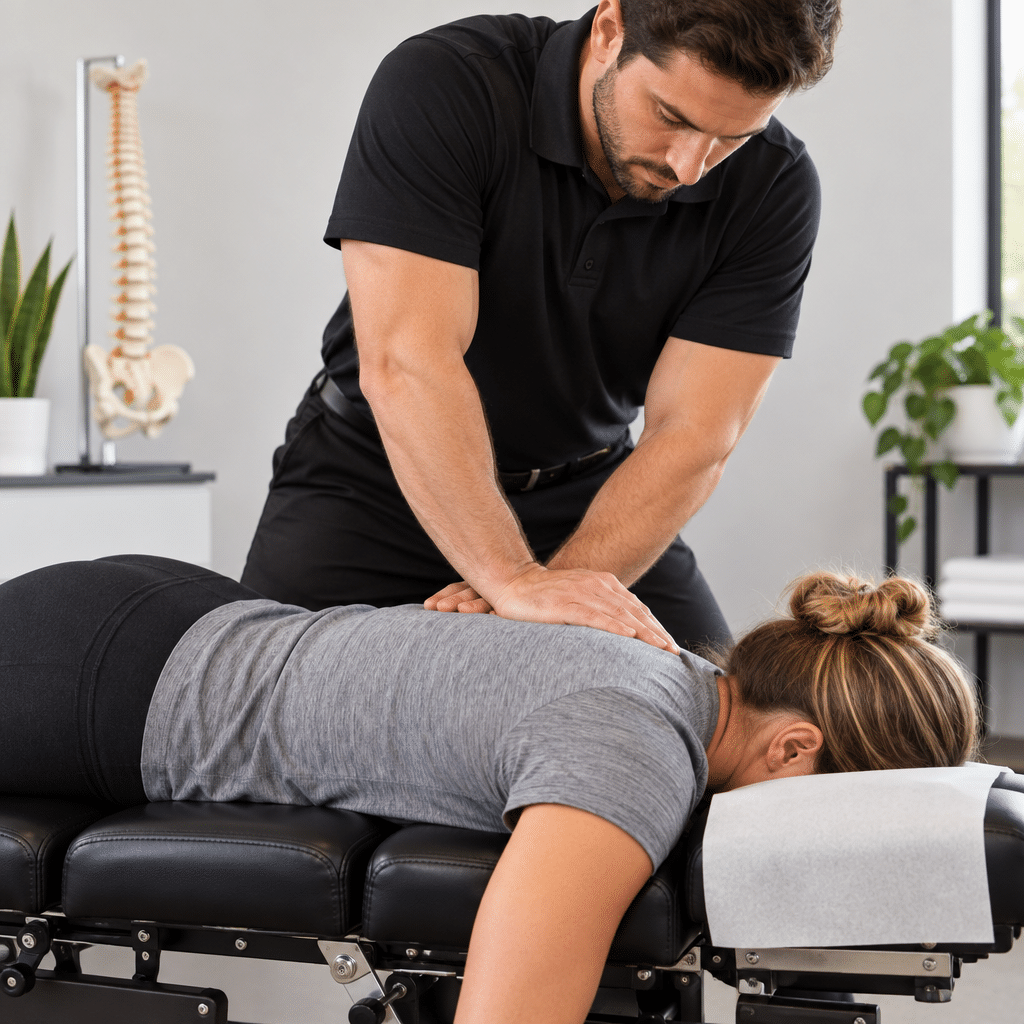
During your appointment your provider may evaluate spinal mobility, posture, joint motion, muscle tension, range of motion, and areas of pain or discomfort. If an adjustment is appropriate, treatment may include gentle, targeted spinal work designed to improve joint movement and reduce restrictions that may be contributing to discomfort.
Depending on your condition, your plan may also include spinal decompression, dry needling, myofascial release, Graston Technique, Class IV laser therapy, cupping, or sports rehabilitation to address mobility limitations, muscle tension, soft tissue concerns, or injury recovery.

Chiropractic Adjustments for Back Pain, Neck Pain, and Headaches
Many patients come in because of back pain, neck pain, or recurring headaches. These symptoms may be related to spinal restriction, poor posture, muscle tension, joint irritation, disc issues, or nerve pressure.
For back pain, adjustments may help improve lower back movement and reduce stiffness, including discomfort linked to desk work, lifting, driving or sports.
For neck pain, care may improve range of motion, reduce tension, and address posture related strain from phone use, computer work, sleeping position, or auto accident injuries.
For headaches and migraines, tension in the neck and upper back may be associated with some types of headache. Spinal manipulation has been studied for headaches, but evidence varies by headache type and remains inconclusive for some conditions. NCCIH reports that spinal manipulation may help some people with cervicogenic headaches and may have potential benefits for migraine, although the research has limitations.
When to Get Evaluated
A chiropractic evaluation may help when you experience: An evaluation can help determine whether chiropractic care is appropriate for your symptoms or whether another type of medical evaluation is needed.
Why Choose Elite Spine & Health Center
Elite Spine & Health Center provides chiropractic care with a focus on pain relief, better mobility, and long term function. Instead of a one size fits all approach, our doctors evaluate your symptoms and build a plan around your specific condition and goals. Patients choose Elite Spine & Health Center for:

Chiropractic adjustments are treatments where a licensed chiropractor uses specific, controlled movements to apply a controlled force to a joint, often in the spine, with the goal of improving joint movement. Spinal manipulation is one technique used by chiropractors and other licensed health professionals. Most adjustments are hands on, though our team is also trained in the Graston Technique for cases involving soft tissue restrictions.
Common reasons include back, neck, hip, knee, or elbow pain, headaches, auto accident injury, whiplash, sprains and strains, certain nerve-related symptoms, pinched nerve, disc herniation, and sports injuries like tennis elbow or rotator cuff irritation. This is a partial list. Many patients start care for an injury and continue for ongoing care based on their individual needs and treatment goals.
Adjustments are a nondrug, nonsurgical approach that may help improve joint movement and reduce pain or stiffness for some musculoskeletal conditions. Research summarized by NCCIH indicates that spinal manipulation may produce modest improvements in pain and function for some people with low-back pain, although results vary by condition and individual. Treatment should be based on an evaluation of the patient’s symptoms, health history, and goals rather than assuming the same approach will work for everyone.
Dr. Billy Cheong, D.C. Medical Reviewer
Board Certified Neuropathy Specialist, Functional Dry Needling Specialist
Doctor of Chiropractic, Texas Chiropractic College. Practicing since 2012. Texas License #12279.
Sources: Spinal Manipulation: What You Need To Know (NCCIH) · Headaches: What You Need To Know (NCCIH)