
Quick Summary
Cupping therapy uses suction cups to gently lift the skin and underlying tissue. It may help loosen tight muscles, promote local circulation, and ease certain types of discomfort. Cupping can also complement chiropractic care and sports rehabilitation. During a session, cups remain on selected areas for several minutes, and temporary circular marks may appear afterward. Our team offers professional cupping therapy in Houston and Spring as part of personalized care plans designed around your symptoms, movement needs, and wellness goals.
Pain, muscle tension, and restricted movement can make everyday activities harder. If stretching, exercise, or other approaches have not provided the relief you want, you may be looking for another option.
Cupping therapy is a complementary treatment that has been used for thousands of years. Modern practitioners use suction cups on specific areas of the body as part of a broader approach to managing muscle tension and discomfort.
We offer professional cupping therapy at our Houston and Spring locations. Our team can incorporate it into a personalized care plan based on your symptoms, activity level, and goals.
What Is Cupping Therapy?
Cupping therapy involves placing cups on the skin and creating suction. This suction gently lifts the skin and underlying tissue into the cup.
The treatment may influence local blood flow and create a stretching sensation in the tissues. Cupping is also commonly used as part of myofascial work, particularly when muscles and surrounding connective tissues feel tight.
Fascia is a thin layer of connective tissue surrounding muscles and other structures throughout the body. When this tissue becomes restricted or tense, it may contribute to discomfort and reduced mobility.
By lifting the tissue rather than compressing it, cupping may help loosen areas of tension and make movement feel more comfortable.
How Does Cupping Therapy Work?
During a session, cups are placed over selected areas of the body. Suction draws the skin and superficial tissue upward into the cup.
The resulting pressure may increase local circulation and create a mild stretching sensation. Some people describe the treatment as relaxing, while others notice a feeling of tightness where the cups are placed.
Cupping may also be used alongside other therapies. We may incorporate it into a broader treatment approach that can include chiropractic care, rehabilitation, and other pain management techniques.
The specific approach depends on your symptoms and the areas being treated.
What Are the Potential Benefits of Cupping Therapy?
Cupping therapy may be useful for people dealing with certain types of muscle tension and discomfort.
Potential benefits include:
- Helping loosen tight muscles and fascia
- Promoting local blood flow
- Easing muscle tension
- Supporting recovery after physical activity
- Helping reduce certain types of neck and back discomfort
- Complementing chiropractic care and rehabilitation
- Promoting relaxation in areas affected by tension
Cupping is not a replacement for appropriate medical care. Instead, we may use it as one component of a broader plan based on your individual needs.
Cupping Therapy for Neck, Back, and Head Pain
Muscle tension around the neck, shoulders, and upper back can affect how you move and feel throughout the day. Tight muscles may also contribute to tension-related headaches.
Cupping can be applied to selected areas where muscle and fascial tension are present. The suction may help relax those tissues and improve local circulation.
For back discomfort, cupping may be used around areas of muscular tightness. It can also complement other treatments designed to improve movement and address underlying physical concerns.
If you experience frequent or severe headaches, neck pain, or back pain, it is important to identify the underlying cause rather than relying only on temporary relief.
What Happens During a Cupping Therapy Session?
Your session begins with an assessment of the areas causing discomfort. We consider your symptoms, physical condition, and treatment goals before deciding where cups should be placed.
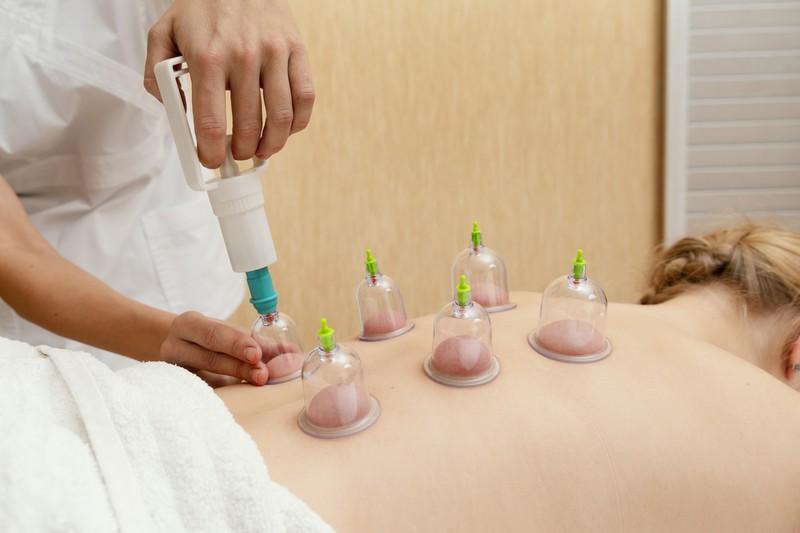
The cups are then positioned on the skin. Depending on the technique being used, suction may be created with a manual pump or another method.
Once the cups are in place, you may feel pulling or pressure as your skin and superficial tissues are gently drawn upward.
The cups generally remain in place for several minutes. Your provider monitors the treatment and adjusts the technique based on your comfort and needs.
After the cups are removed, the treated areas may appear red or develop temporary circular marks. These marks are a normal response to the suction and typically fade over several days.
What Does Cupping Therapy Feel Like?
Cupping is generally not painful, although you may notice a pulling, stretching, or pressure sensation while the cups are attached.
The experience can vary depending on the technique, the area being treated, and your individual sensitivity.
After treatment, the skin may feel slightly tender. You may also notice circular discoloration where the cups were placed.
These marks can look similar to bruising, but they are caused by the suction and are usually temporary.
Let us know if you experience significant discomfort during a session. Your comfort matters, and the treatment can be adjusted when appropriate.
Dry Cupping vs. Wet Cupping
There are different forms of cupping therapy. The two commonly discussed techniques are dry cupping and wet cupping.
Dry cupping uses suction cups placed directly on the skin. The cups create suction without breaking the skin. This is the approach generally associated with muscle and fascial work.
Wet cupping involves making small punctures in the skin in addition to applying suction. Because this technique breaks the skin, it carries different considerations and is not appropriate for everyone.
The type of cupping used should be based on your individual circumstances and the provider’s clinical judgment.
Is Cupping Therapy Right for Everyone?
Cupping may not be appropriate for every person. Certain health conditions, medications, and skin concerns can affect whether the treatment is suitable.
People with certain bleeding or clotting disorders, some skin conditions, or other medical concerns may need to avoid cupping or receive additional guidance before treatment.
Always discuss relevant health conditions and medications with your healthcare provider before beginning a new therapy.
We can also discuss your symptoms and goals to determine whether cupping may be a suitable part of your care plan.
Why Choose Professional Cupping Therapy?
Professional treatment goes beyond simply placing cups on the skin. Proper placement, suction, timing, hygiene, and technique all matter.
At our Houston and Spring locations, we use cupping as part of a broader approach to pain relief and physical wellness. Depending on your needs, it may be combined with chiropractic care or sports rehabilitation.
Our goal is to understand what is contributing to your discomfort and develop an approach that fits your situation.
Get Professional Cupping Therapy at Elite Spine & Health Center
You do not have to let persistent muscle tension or discomfort keep you from the activities you enjoy. At Elite Spine & Health Center, we offer professional cupping therapy at our Houston and Spring locations as part of personalized care plans.
If you are interested in cupping therapy or want to learn if it may fit your needs, contact us today to schedule an appointment.
Frequently Asked Questions
The duration can vary depending on the areas being treated and your overall care plan. The cups generally remain in place for several minutes during treatment.
Circular marks can remain visible for several days. Their appearance and duration vary based on the individual, the amount of suction, and the treatment area.
Most people experience pulling or pressure rather than significant pain. You may experience mild tenderness afterward, but treatment should remain within a comfortable range.
Cupping may help ease muscle tension and can be incorporated into care for certain types of neck and back discomfort. Your treatment should be based on the underlying cause of your symptoms.
Yes. Cupping can be used alongside chiropractic care and sports rehabilitation when appropriate. We can determine how it may fit into your overall treatment plan.