
Quick Summary
Triathlon training requires a balance of endurance, preparation, recovery, and patience. Build your routine around swimming, cycling, and running while incorporating brick workouts and both short and long sessions. Nutrition, hydration, rest, and listening to your body also matter throughout training. After race day, give yourself time to recover before returning to intense exercise. If pain or an injury interferes with your progress, professional care may help you address the problem and work toward returning to your active routine safely.
Training for a triathlon takes more than logging miles in the pool, on the bike, or on the road. You need a balanced approach that prepares your body for three different disciplines while giving it enough time to recover.
A smart training plan can help you build endurance without constantly pushing yourself to exhaustion. Recovery matters just as much. Your body needs time to repair after demanding workouts and after race day.
We have put together practical tips to help you train smarter, prepare for race day, and recover after completing a triathlon.
Build Your Training Around All Three Disciplines
A triathlon combines swimming, cycling, and running. Each activity places different demands on your body, so your training should include all three.
Avoid focusing heavily on your favorite discipline while neglecting the others. Instead, create a schedule that gives each activity regular attention.
Swimming can help develop endurance while improving your comfort in the water. Cycling builds cardiovascular fitness and leg strength. Running prepares your body for the final stage of the race, when fatigue may already be setting in.
Your schedule should also include rest days. Training harder every day does not automatically lead to better performance. Planned recovery gives your body an opportunity to adapt to your workouts.
Practice Brick Workouts
One of the biggest challenges in a triathlon is moving from one discipline to another.
A brick workout combines two activities in the same training session. For example, you might cycle and then run immediately afterward. You could also combine a swim and bike workout.
These sessions help your body adjust to the physical changes that happen when you switch activities.
Brick workouts can also help you understand how your body feels during transitions. You can practice pacing, hydration, equipment changes, and other parts of your race routine before competition day.
Start with manageable sessions rather than trying to recreate an entire race during your first brick workout. As your fitness improves, you can gradually increase the duration or intensity.
Pay Attention to Nutrition and Hydration
Food is an important part of any endurance training plan. Your body needs enough energy to complete workouts and recover afterward.
Focus on a balanced diet that includes carbohydrates, protein, healthy fats, fruits, vegetables, and plenty of fluids. Carbohydrates can be an important source of energy for endurance activity, while protein helps with muscle repair and recovery.
The timing of meals and snacks can also matter. Try different options during training rather than experimenting with unfamiliar foods on race day.
Hydration deserves the same attention. Sweating during long workouts can lead to fluid loss. Your hydration needs depend on factors such as workout duration, temperature, and how much you sweat.
If you are unsure about your nutrition or hydration needs, consider speaking with a qualified healthcare or nutrition professional.
Do Not Ignore Short Workouts
A common misconception is that every workout needs to last an hour or more to be worthwhile.
That is not true.
Short workouts can have a place in a well-rounded triathlon training schedule. A brief swim, easy run, mobility session, or cycling workout may fit better on a busy day while still keeping you active.
Short sessions can also help you manage training volume when your body feels tired. The goal is not to make every workout difficult. Your training should include a mixture of longer endurance sessions, shorter workouts, and recovery days.
Consistency over time matters more than trying to make every workout your hardest one.
Work With the Right Professionals
Triathlon training can place considerable stress on your muscles, joints, and connective tissues. Working with knowledgeable professionals can help you better understand your body and address problems before they interfere with your training.
A qualified trainer can help you develop a program suited to your current fitness level and goals. If pain or an injury develops, a healthcare professional can assess the issue and recommend appropriate care.
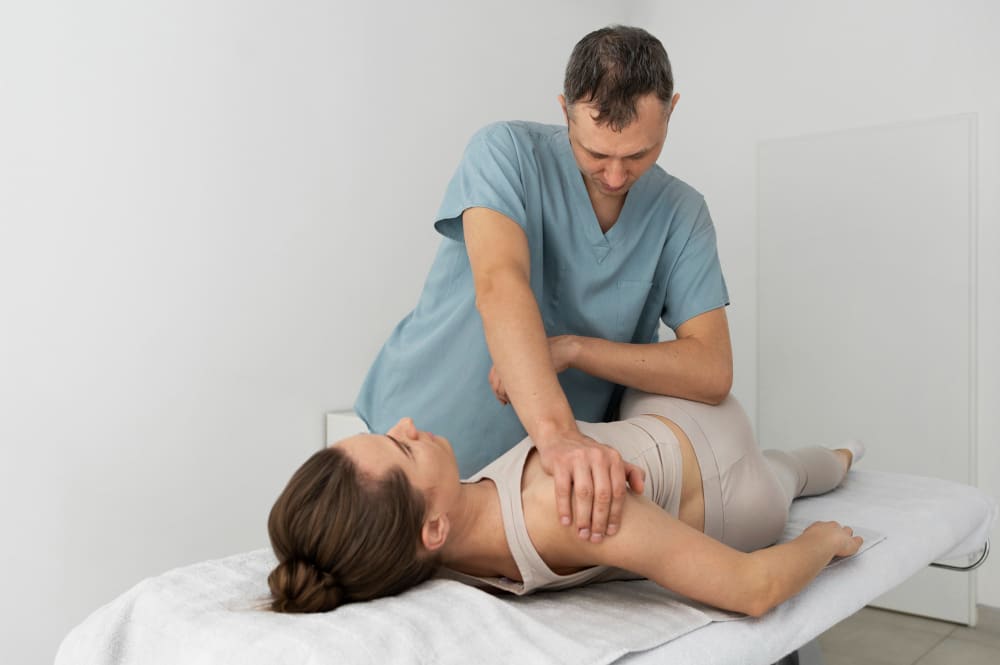
We work with active individuals who want to stay active while addressing physical concerns. Our chiropractic care and sports rehabilitation services can be part of a broader approach to managing aches, movement concerns, and recovery needs.
Do not try to push through persistent or worsening pain simply because you have a race approaching.
Listen to Your Body During Training
Some fatigue is expected when you train for an endurance event. Persistent pain is different.
Pay attention to changes in how your body feels. Ongoing soreness, reduced performance, unusual fatigue, or pain that changes how you move may be signs that you need to adjust your training.
Rest is not a sign that you are falling behind. It is part of the training process.
If you feel that something is not right, give your body time to recover and seek professional guidance when appropriate. Addressing a problem early may help keep a minor concern from becoming a bigger interruption to your training.
Give Your Body Time to Recover After the Race
Crossing the finish line does not mean your body is immediately ready for another hard workout.
After completing a triathlon, give yourself time to recover. You may experience muscle soreness and general fatigue after the event, particularly if you pushed yourself throughout the race.
Gentle movement can be useful as you begin returning to normal activity. Walking, easy swimming, or light cycling may be more comfortable than immediately returning to intense running or strength training.
Do not rush into your next training cycle simply because you feel motivated after finishing the race.
Ease Back Into Training
Once you have had enough time to recover, gradually return to your normal routine.
Start with lower-intensity activities and shorter sessions. Pay attention to how your body responds before increasing duration or intensity.
Swimming, walking, and light cycling can be useful options during an early return to activity. As you feel stronger, you can gradually reintroduce harder workouts.
Your next training cycle should reflect how your body actually feels, not simply what your previous training schedule says you should be doing.
Consider Recovery Strategies
Recovery can include several simple habits. Getting adequate sleep, eating balanced meals, staying hydrated, and allowing rest days can all form part of your routine.
Some athletes also use compression garments after demanding events. These may feel comfortable and can be part of a personal recovery routine, although they should not replace rest or appropriate medical care.
Cold water exposure is another strategy some athletes use after strenuous activity. Research on recovery methods varies, so it is worth considering your individual needs and preferences rather than assuming one method works for everyone.
The most important part of recovery is giving your body enough time and resources to return to normal.
How We Can Help With Triathlon Training and Recovery
Preparing for a triathlon requires commitment, but you do not have to ignore your body along the way.
We work with athletes and active individuals who want to maintain an active lifestyle while addressing physical concerns. Our chiropractic care and sports rehabilitation services can help you work toward better movement and recovery.
Train Smarter With Elite Spine & Health Center
Ready to train with greater awareness of your body? At Elite Spine & Health Center, we work with athletes and active individuals dealing with pain, stiffness, and sports-related concerns.
Contact us today to schedule an appointment and learn how our chiropractic care and sports rehabilitation services can help you stay active and work toward your triathlon goals.
Frequently Asked Questions
Your ideal training schedule depends on your experience, fitness level, race distance, and goals. A balanced plan should include swimming, cycling, running, recovery, and rest.
A brick workout combines two triathlon disciplines in one session, such as cycling followed immediately by running. It helps you become more comfortable with transitions between activities.
It is generally best to give your body time to recover after a demanding endurance event. When you resume activity, start with gentle, low-impact movement and gradually increase intensity.
Do not ignore persistent or worsening pain. Reduce or modify the activity that aggravates it and consider consulting an appropriate healthcare professional for evaluation and guidance.
Chiropractic care may be part of a broader approach to addressing certain musculoskeletal concerns. We also offer sports rehabilitation for active individuals working toward recovery and a return to activity.