
Insert your content here
Quick Summary
Evidence on light-based treatment for the lower back splits along dose and duration. Cochrane found the trials too varied for a firm conclusion, while later analysis showed a clinically important short-term benefit only where at least three joules per point were delivered and only in people whose pain had lasted under thirty months. Soft tissue and inflammatory complaints respond more readily than nerve root compression. Sessions are brief and comfortable, adverse events are rare, and progress should be measured through function rather than a pain score alone.
Back pain comes with a long list of proposed solutions, and sorting the useful ones takes patience most people in pain don’t have. Laser therapy for back pain sits in an unusual position within that list, since it has been studied for decades and still divides opinion among researchers. Some trials report clear relief. Others find almost nothing. That gap is not an accident, and understanding what produced it changes how you read every claim about the treatment. Here is what the evidence looks like when you take it apart.
The Short Answer From Published Trials
Honesty serves better than enthusiasm here. A Cochrane review of randomized trials concluded that the studies varied so widely in their populations, their treatment settings, and their comparison groups that no firm conclusion could be drawn about its clinical effect on low back pain. Several trials it examined found statistically significant pain relief that patients would not notice. Reviews published since have landed in different places, with some reporting a real benefit and others reporting almost none.
None of that makes the treatment worthless. It makes the treatment conditional, which is a different thing entirely. Once you sort the trials by how the light was delivered and by who received it, the contradictions start to organize themselves into a pattern. Certain patients did well under certain conditions, and the rest of the research recorded what happens when those conditions are absent. So the useful question shifts away from whether the therapy works and toward when it works.
How Light Reaches Tissue Below the Surface
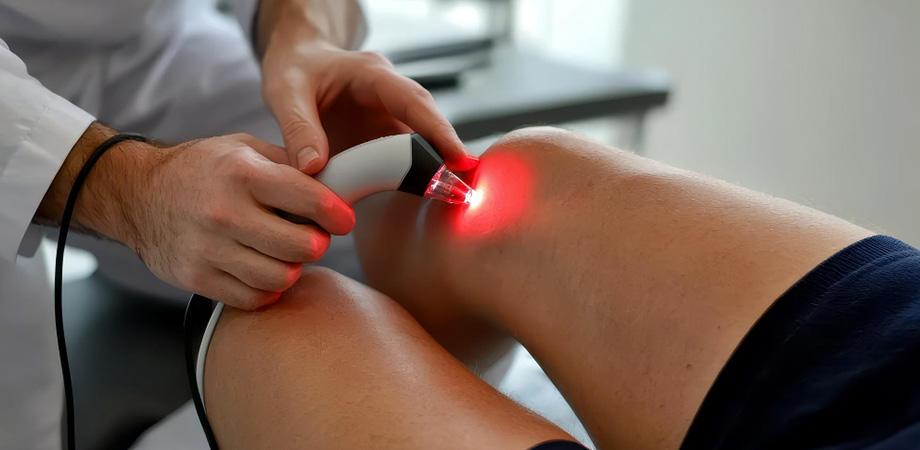
Skin, fat, and muscle absorb and scatter energy, which sets a hard limit on what any device can accomplish from the outside. Wavelengths in the red and near-infrared range pass through tissue more readily than visible light at other frequencies, and near-infrared reaches deepest. That property is what allows treatment aimed at the lumbar spine to influence structures well below the surface rather than warming the skin. Power output governs how much of that energy survives the trip, which is why Class IV systems handle thicker areas better than older low-powered units. Body composition affects the calculation too, since a lumbar spine sits farther from the surface in some patients than in others. All of this happens without heat or vibration a patient would register.
Which Kinds of Back Pain Show the Most Promise
Duration turns out to be one of the better predictors of response, and it explains much of the disagreement. Complaints that have been present for a shorter stretch of time appear more responsive than problems carried for many years, which fits what clinicians observe in tissue that has not yet remodeled around the pain. Non-specific muscular and soft tissue involvement responds more readily than clear structural compression of a nerve root. Discogenic pain occupies a middle position, and it often calls for treatment aimed at the disc alongside any light-based work. Pain driven by inflammation tends to answer better than pain driven purely by mechanical instability. Sorting your own situation into one of those groups requires an examination rather than a guess.
What Separated the Trials That Worked From the Ones That Did Not
Energy delivered per point turns out to be the dividing line. A meta-analysis of fifteen randomized controlled trials involving more than a thousand participants found moderate-quality evidence for a clinically important short-term benefit in chronic non-specific low back pain, though the benefit appeared only in studies delivering at least three joules per point and only among participants whose pain had lasted under thirty months. Underdosed protocols produced disappointing results across the board. Treatment frequency and the total number of sessions shaped outcomes as well. None of this is a technicality, since the same device can produce two different studies depending on the settings. Read the older negative findings with those variables in mind, and the contradictions start to look less like contradictions.
What a Session Feels Like and What Follows It
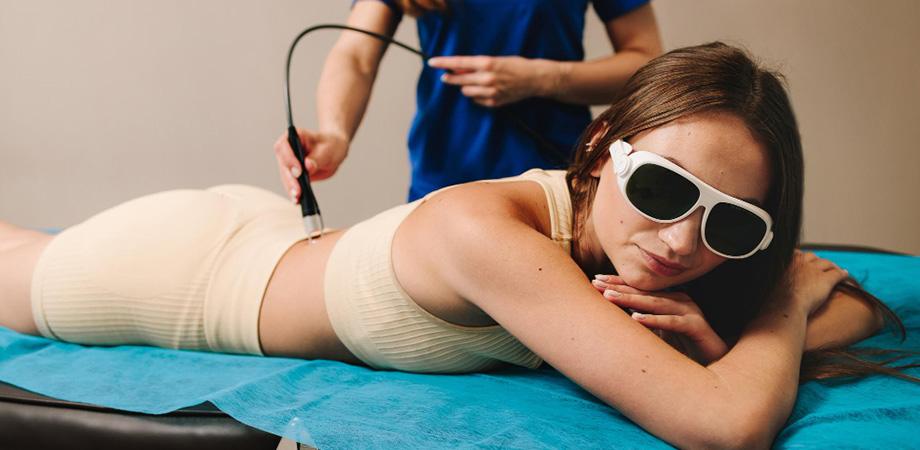
Anticipation usually outruns the reality of the appointment, which surprises most first-time patients. An applicator passes over the lower back for several minutes while you lie still, and the sensation ranges from gentle warmth to nothing perceptible at all. There is no recovery period afterward, and most patients return to work or training the same day. Relief, when it comes, tends to build across a series of visits rather than arriving after the first. Your provider should be recording range of motion and functional tasks throughout, since those measures reveal progress that a pain score alone can hide. A course that produces no measurable change by its midpoint deserves a conversation rather than a renewal.
Safety, Limits, and Who Should Look Elsewhere
Adverse events show up rarely in the published trials, which places this treatment among the gentler options available for spinal complaints. Direct exposure to the eyes calls for protective eyewear, and treatment over an active malignancy, over the abdomen during pregnancy, or over an implanted stimulator generally gets avoided. Progressive neurological signs such as weakness, numbness that spreads, or changes in bladder control point toward urgent evaluation rather than a course of light. Structural problems that require decompression or surgical attention will not resolve under a laser applicator alone. A thorough history and physical examination should come first, every single time. Anyone offering treatment without one has skipped the step that protects you most.
Deciding Whether Laser Therapy Fits Your Back Pain
A fair verdict on this treatment depends on conditions rather than headlines. Delivered at an adequate dose to the right kind of back pain, it has a defensible record. Delivered casually, it produces the flat results that fill the skeptical half of the literature. The variable you control is the quality of the evaluation that comes before the first session.
At Elite Spine & Health Center, Class IV Laser Therapy forms part of a broader plan rather than a standalone service. Our doctors examine the source of your symptoms first, then combine light-based treatment with rehabilitation, and where findings point toward disc involvement, we can add spinal decompression. Our Westchase and Champion Forest offices hold to the same standard of assessment.
Call the location closest to you or book an appointment online, and let us find out whether your back pain belongs to the group this treatment tends to help.
FAQs
Results depend on conditions. Cochrane found the available trials too varied for a firm conclusion, while a later analysis reported a clinically important short-term benefit at adequate dosing in people whose pain had not lasted for years. Underdosed protocols perform poorly, which explains much of the disagreement across published studies.
Near-infrared wavelengths penetrate tissue further than other frequencies, and higher-powered Class IV systems deliver enough energy to influence structures below the surface. Body composition affects how much arrives at the target, since a lumbar spine sits deeper in some patients than others. Treatment produces no heat or vibration you would notice.
Weakness in the legs, numbness that spreads, or changes in bladder or bowel control call for prompt medical assessment rather than a course of light. Pain that follows significant trauma belongs in the same category. A thorough history and physical examination should always come before any treatment plan gets built.