
Insert your content here
Quick Summary
Light in the red and near-infrared range is absorbed by cytochrome c oxidase in the mitochondria, which appears to lower inflammation and support repair inside a painful knee. Trials following recommended dosing show pain relief beyond placebo, while underdosed protocols show close to nothing, and wavelength choice shifts results as well. Osteoarthritis, patellofemoral pain, and tendon problems respond most reliably, though structural damage does not. Relief builds across a course of visits rather than a single session, and outcomes hold up best when treatment supports strength work rather than replacing it.
Knee discomfort has a way of narrowing a life. Stairs get planned around, walks get shorter, and the idea of a full day on your feet starts to feel negotiable. Interest in laser for knee pain has grown steadily over the past decade, driven partly by people looking for options that sit somewhere between medication and surgery. The science behind it is older than most patients expect, and the findings are more specific than the marketing usually suggests.
So how well does light hold up under clinical scrutiny?
What Happens Inside the Knee When Light Reaches It
Every cell in your body runs on energy produced by mitochondria, and those structures turn out to be sensitive to particular wavelengths. Red and near-infrared light in roughly the 600 to 1000 nanometer range is absorbed by an enzyme called cytochrome c oxidase, which sits at the end of the mitochondrial electron transport chain.
Within an arthritic or overloaded knee, that shift is thought to influence the local environment in several ways. Reported effects include reduced inflammation, less swelling around the joint, and better conditions for tissue repair. A Class IV device delivers this energy at higher power than older units, which allows treatment to reach deeper structures in a shorter session. None of this replaces the cartilage you have already lost, and no responsible clinician would claim otherwise.
What the Research Shows About Pain and Stiffness
Clinical trials in this area stretch back decades, and the picture they paint is more encouraging than the guidelines might suggest. A systematic review and meta-analysis published in BMJ Open examined randomized placebo-controlled trials in knee osteoarthritis and found that treatment following recommended dosing produced meaningful pain relief beyond placebo, both during weeks four through eight of therapy and at follow-up two to eight weeks after treatment ended. Trials using lower doses showed little or no benefit. That split explains a great deal of the confusion patients encounter online. Two people can receive something called laser therapy and walk away with entirely different experiences. Guidelines have been slow to reflect the distinction, which is one reason the treatment carries a mixed reputation despite the positive findings.
Why Dose Decides Whether Anything Changes
Two variables separate a session that helps from one that passes the time. Wavelength is the first, since different frequencies penetrate to different depths and interact with tissue in different ways. A double-blinded randomized controlled trial in scientific reports compared 808 nanometer and 660 nanometer light against a sham treatment in people with knee osteoarthritis, and the 808 nanometer group showed greater gains in knee extensor strength than either comparison. Energy delivered per treatment point is the second variable, and it is where many underpowered devices fall short. Session frequency and the total length of the course round out the equation, since a single visit rarely moves a chronic joint problem. Skip any of these and the outcome becomes unpredictable.
Knee Problems That Tend To Respond
Osteoarthritis draws the most attention in the literature, and it remains the condition most often treated with light-based therapy at the joint. Patellofemoral pain, the ache that shows up under the kneecap during stairs and squats, has also been studied as a candidate for adjunctive care. Tendon problems around the knee sit in a similar category, particularly patellar tendinopathy in people who load the joint repeatedly. Post-surgical stiffness and swelling can respond as well, though the timing of treatment within recovery makes a real difference. What these conditions share is a soft tissue or inflammatory component that light may influence. Structural damage that requires mechanical correction falls outside what any wavelength can reasonably address, and an honest assessment should say so.
What a Full Course of Treatment Involves
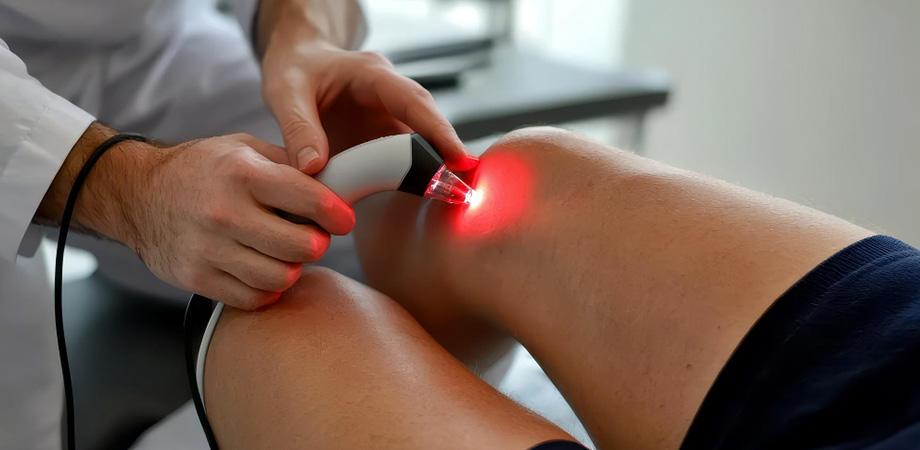
Expectations tend to sit in the wrong place before a first appointment, so a plain description helps. A single visit usually takes under fifteen minutes at the joint, and most people feel a mild warmth or nothing at all while the applicator moves across the area. Meaningful change generally appears across a series rather than a session, with schedules commonly built around two or three visits per week over a period of several weeks. Progress gets tracked through function as much as pain, which means measuring how you rise from a chair or handle a flight of stairs. Some patients notice a shift early, while others need most of the course before the difference becomes obvious.
Where It Sits Alongside Strength Work and Movement
No passive therapy carries a knee on its own, and few clinicians would argue otherwise. Quadriceps and hip strength govern how load travels through the joint, and weakness there tends to undo whatever relief arrives from other sources. Light-based treatment earns its place by lowering pain enough that you can train properly, which is a genuine contribution rather than a small one. Trials that combine the two approaches generally report better outcomes than either approach alone. Manual therapy, gait work, and load management round out a sound plan. Think of the laser as something that opens a window, and think of the rehabilitation as the work that walks through it.
Getting a Clear Answer About Your Knee
Light-based therapy holds a reasonable place in knee care, provided the dose is right, and the expectations stay honest. It performs best as one part of a plan that includes movement and strength work. A better question than whether laser works in general is whether it fits the specific problem inside your knee. That answer starts with an evaluation rather than a brochure.
At Elite Spine & Health Center, our Class IV Laser Therapy follows protocols matched to your condition and delivered by doctors who track function alongside symptoms. We pair it with active rehabilitation, and where the findings point toward tendon involvement, we can bring shockwave therapy into the plan. Patients at our Westchase and Champion Forest offices receive the same evaluation before any course of care begins.
Give us a call or request an appointment online, and let us take a proper look at what your knee needs to move well again.
FAQs
Most protocols run two or three visits per week across several weeks, since a single appointment rarely shifts a chronic joint problem. Some patients notice a change early in the course, while others need most of it before the difference becomes clear. Your provider should measure function throughout to confirm progress.
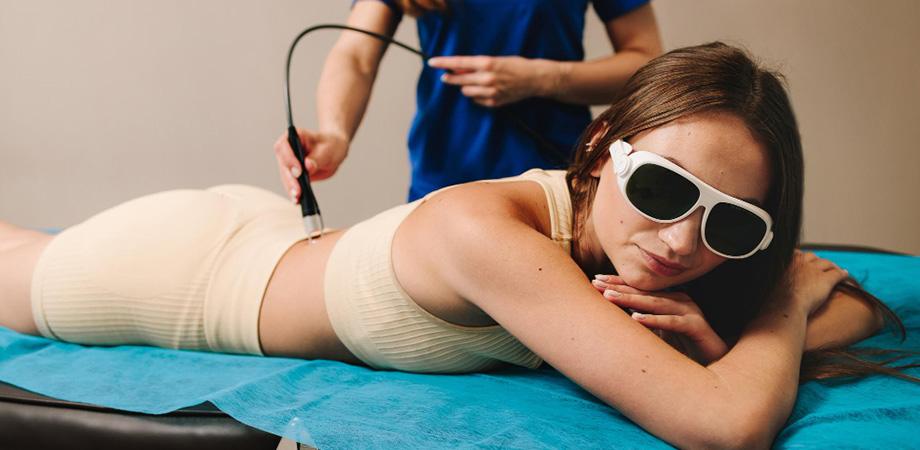
No. The applicator passes over the joint for a short period while you rest, and the sensation ranges from mild warmth to nothing at all. There is no recovery time afterward, and most people return to normal activity the same day. Protective eyewear gets worn throughout the session as a standard precaution.
Not in every case. Light-based care may reduce pain and improve function in joints with an inflammatory or soft tissue component, which sometimes delays the conversation about surgery. Damage that requires mechanical correction falls outside what any wavelength can address. An examination and appropriate imaging should guide that decision rather than assumptions.