
Quick Summary
Sports rehab and sports chiropractic can be valuable parts of an athlete’s recovery and performance routine. Chiropractic care focuses on mobility, joint function, muscle tension, and movement, while rehabilitation helps rebuild strength, flexibility, stability, and control. Together, these approaches can help active individuals address sports-related concerns and work toward returning to their favorite activities. We tailor care to each person’s needs, goals, activity level, and recovery progress while encouraging a gradual return to training.
Athletes put their bodies through repeated stress. Training, competition, and intense workouts can lead to muscle soreness, joint restrictions, strains, and other sports injuries. Even small movement problems can affect performance when they are left unaddressed.
Recovery should be more than simply waiting for pain to disappear. A thoughtful approach can help restore movement, rebuild strength, and prepare your body to return to activity.
Sports rehab and sports chiropractic are two approaches that can play a role in this process. At our practice, we work with athletes and active individuals who want to recover from injuries, move better, and stay active.
What Is Sports Chiropractic?
Sports chiropractic is a form of chiropractic care focused on the physical demands placed on active bodies. It can address issues involving the spine, joints, muscles, and movement patterns.
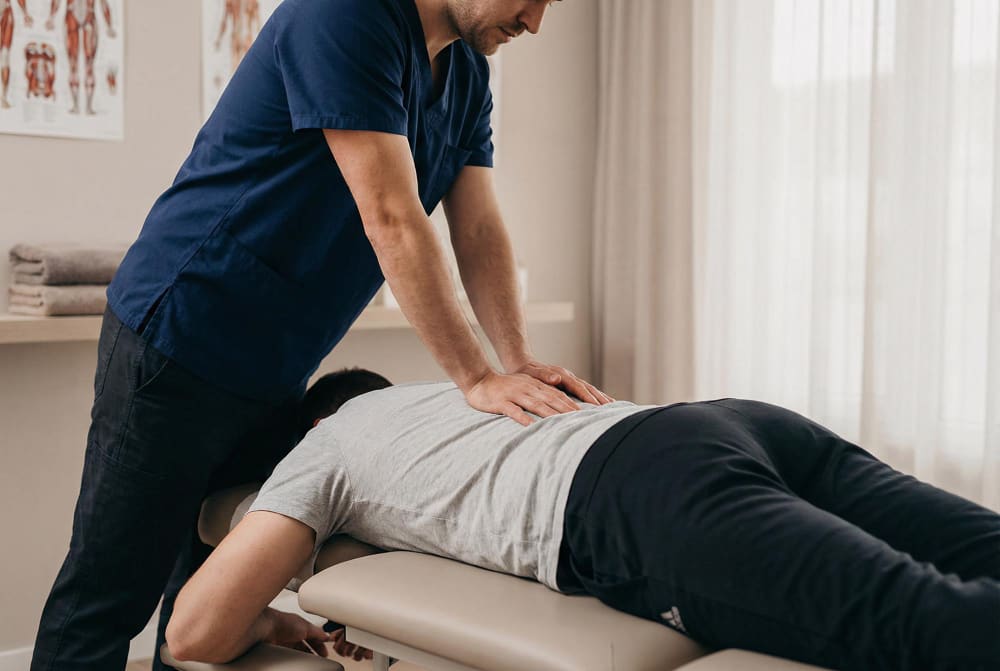
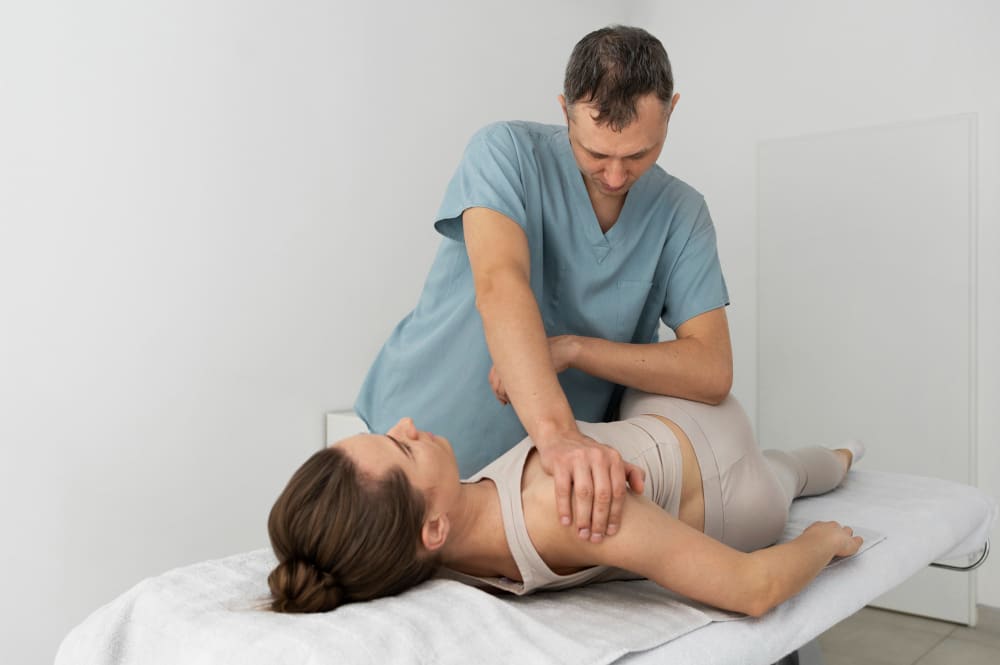
Athletes may seek sports chiropractic after an injury or as part of their regular approach to maintaining mobility. Care can include spinal and joint adjustments, soft tissue techniques, stretching, and other movement-based strategies.
The goal is not simply to address one painful area. We look at how different parts of the body work together. A restriction in one area can sometimes affect movement elsewhere.
Improving mobility and addressing movement limitations may help athletes move more comfortably during training and competition.
What Is Sports Rehab?
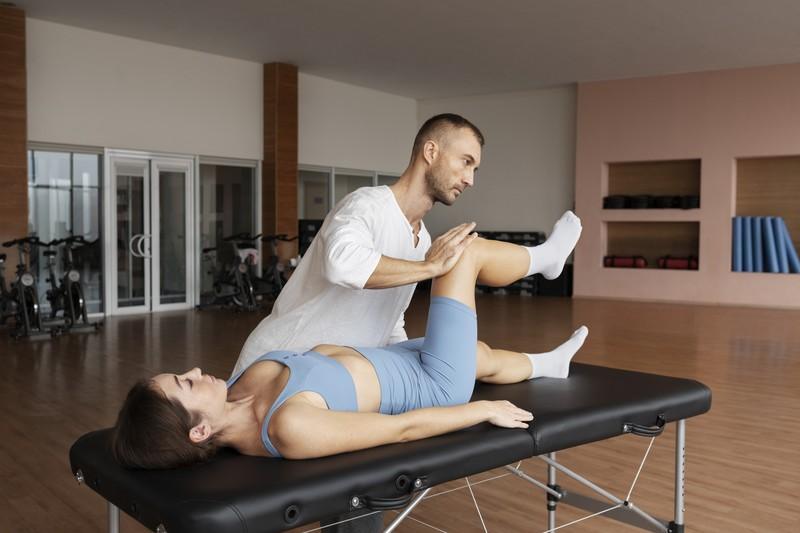
Sports rehab focuses on helping an athlete regain function after an injury or physical setback. A rehabilitation plan can include exercises that improve strength, flexibility, stability, balance, coordination, and movement control.
The exact approach depends on the injury and the athlete’s needs. Someone recovering from a lower-body injury may need exercises focused on strength and stability. An athlete dealing with a shoulder problem may need to rebuild mobility and control.
Sports rehab can also be useful when an athlete is returning to activity after time away. The goal is to progress gradually rather than immediately returning to the same level of activity.
Common Sports Injuries We Address
Sports injuries can affect almost any part of the body. Some develop suddenly, while others build gradually through repetitive stress.
Common concerns among athletes include:
- Sprains and strains
- Tendonitis
- Runner’s knee
- Shin splints
- Plantar fasciitis
- Hamstring and groin strains
- Shoulder injuries
- Tennis and golfer’s elbow
- Lower back pain
- Neck and shoulder tension
- Repetitive strain injuries
Some injuries require medical evaluation before rehabilitation begins. Fractures, dislocations, severe trauma, and other serious conditions may need immediate medical attention.
For appropriate musculoskeletal concerns, chiropractic care and sports rehab can become part of a broader recovery plan.
How Sports Chiropractic Can Help Athletes
Improve Joint Mobility
Restricted joints can affect how an athlete moves. Chiropractic adjustments and joint mobility techniques can help address certain restrictions and improve movement.
Better mobility may make everyday activities and athletic movements more comfortable.
Address Muscle Tension
Intense training can leave muscles tight and fatigued. Soft tissue techniques can target areas of tension and help improve flexibility.
Our approach may include myofascial release and other hands-on techniques based on the individual’s needs.
Support Better Movement
Athletic performance depends on coordinated movement. Restrictions or imbalances can change how the body handles physical demands.
Sports chiropractic can address certain movement limitations and help athletes work toward more efficient mechanics.
Manage Pain
Pain can make it difficult to train or participate in a favorite sport. Chiropractic care may help address musculoskeletal sources of discomfort while working alongside an appropriate rehabilitation plan.
Rather than simply working around the painful area, we consider how the surrounding joints and muscles contribute to movement.
How Sports Rehab Supports Recovery
Recovery does not end when pain starts to decrease. Your body may still need to rebuild strength, stability, and confidence before you return to full activity.
Sports rehab can help bridge that gap.
Rebuild Strength
An injured area may become weaker during a period of reduced activity. Targeted exercises can gradually rebuild strength and help the body handle physical demands again.
Improve Stability and Balance
Balance and stability are important in nearly every sport. Rehabilitation exercises can challenge these abilities and help athletes regain control after an injury.
Restore Flexibility
Tight muscles and restricted movement can affect athletic technique. Stretching and mobility exercises can help restore a more comfortable range of motion when appropriate.
Gradually Return to Activity
Returning to training too quickly can place unnecessary stress on an area that has not fully recovered.
A progressive rehabilitation plan allows athletes to increase activity gradually. This can make the transition back to normal training more manageable.
Techniques Used in Sports Rehab and Chiropractic Care
Different athletes require different approaches. Depending on your condition and goals, care may include:
- Spinal and joint adjustments: These techniques can address certain mobility restrictions and help restore movement.
- Myofascial release: Hands-on soft tissue work can help address muscle tension and improve flexibility.
- Stretching and strengthening exercises: These exercises can improve mobility, strength, and control during recovery.
- Kinesio taping: Taping may be used to give certain areas additional support while allowing movement.
- Radial pulse wave therapy: This treatment uses mechanical pulses directed toward targeted tissues and may be included in care for certain pain conditions.
- Rehabilitation exercises: A personalized exercise program can address weaknesses, stability issues, and movement patterns that may affect an athlete’s recovery.
The right combination depends on the individual. We consider the athlete’s symptoms, activity level, goals, and physical needs when developing a care approach.
Who Can Benefit From Sports Rehab?
You do not have to be a professional athlete to benefit from sports-focused care.
We work with people at different activity levels, including runners, cyclists, swimmers, gym-goers, martial artists, dancers, and recreational athletes. Weekend athletes and people training toward personal fitness goals may also experience physical demands similar to those faced by competitive athletes.
Sports rehab may be appropriate when an injury has interrupted your routine or when you need help rebuilding strength and movement before returning to activity.
The same principle applies to sports chiropractic. You can seek care because of an existing concern, during recovery, or as part of an effort to maintain healthy movement.
When Should You Seek Care for a Sports Injury?
Not every ache requires professional treatment. Muscle soreness after a demanding workout can be normal.
However, persistent pain deserves attention. You may also want to seek professional guidance if pain changes the way you move, limits your range of motion, keeps returning, or prevents you from participating in your usual activities.
Ignoring a problem because you have an upcoming competition can make training more difficult. Getting an appropriate evaluation can help you understand what is happening and what steps may be suitable for your recovery.
Stay Active With a Smarter Recovery Approach
Athletic goals require commitment, but pushing through every problem is not always the best strategy. Recovery, mobility, strength, and movement quality all matter when you want to remain active for the long term.
Sports chiropractic and sports rehab can play different but complementary roles in an athlete’s care. Chiropractic care may focus on mobility and musculoskeletal function, while rehabilitation emphasizes rebuilding strength, stability, flexibility, and movement control.
We work with active individuals who want to recover from injuries and get back to the activities they enjoy. Our team can help you understand your options and develop a care plan based on your needs.
Get Back to the Activities You Love With Elite Spine & Health Center
An injury does not have to define your athletic routine. At Elite Spine & Health Center, we work with athletes and active individuals through sports chiropractic and sports rehabilitation. If pain, stiffness, or an injury is affecting your training, contact us today to schedule an appointment and learn how our team can help you work toward better movement and recovery.
Frequently Asked Questions
No. Sports chiropractic can benefit recreational athletes, weekend warriors, fitness enthusiasts, and anyone who regularly participates in physical activity.
Sports chiropractic generally focuses on musculoskeletal function, joint mobility, and movement. Sports rehab focuses on rebuilding strength, flexibility, stability, and function after an injury or physical setback.
Sports chiropractic may help address mobility restrictions and movement issues that can affect athletic activity. However, no treatment can guarantee that an injury will not occur.
Recovery time varies based on the injury, its severity, your overall health, and how your body responds to treatment. Your rehabilitation plan can be adjusted as your function improves.
Your return depends on the type and severity of the injury and your progress during recovery. Gradually increasing activity is generally preferable to immediately returning to your previous training level.